

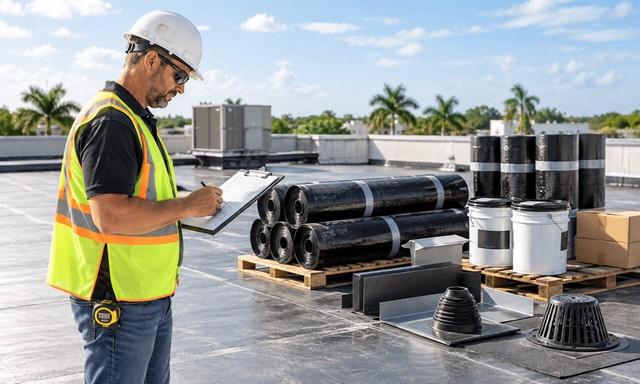
Low-slope roofing materials should be ordered as part of one complete roof system, not as a few rolls of membrane plus whatever accessories were used on the last job. The membrane layers, adhesives or fasteners, insulation, cover boards, flashing, edge materials, and delivery plan all need to work together.
Low-slope roofing membranes can be installed in several ways, including self-adhered, cold-applied, mechanically attached, hot-applied, and torch-applied systems. The current project documents and manufacturer instructions determine which installation method and supporting materials belong together.
The contractor-side goal is straightforward: organize the information early enough for the estimator, purchaser, supplier, foreman, and receiving crew to work from the same plan.
TL;DR
- Identify the exact low-slope roofing system and installation method before calculating quantities.
- Separate the bottom, middle, and top membrane layers so similar-looking rolls are not treated as interchangeable.
- Order primers, adhesives, asphalt, fasteners, plates, or torch-related accessories only when the documented system calls for them.
- Review insulation, cover board, drains, penetrations, perimeter details, and flashing as connected order groups.
- Plan storage, staging, delivery, and roll identification before the material reaches the roof.
Start With the Roof System Listed in the Project Documents
A request for a “low-slope roofing membrane” is not enough to complete an order. Record the manufacturer, product family, sheet type, surface finish, installation method, number of membrane layers, roof surface, insulation plan, and any product approval or project references supplied by the responsible team.
Manufacturer product information may identify several membrane types and installation methods within the same broad roofing category. Those products may look similar when listed on an order, but they can serve different purposes within the roof system. The exact product information and project specification should control the final selection.
Use those details to review SYL’s low-slope roofing materials and accessories. The Products area can help organize the supply conversation, but it does not confirm that a displayed product is currently available, approved, compatible, or correct for a particular roof.
If the roof system is still undecided, pause the release. A supplier can help organize known product information, but the project team needs to resolve the roof assembly before quantities and accessories are finalized.
Separate the Bottom, Middle, and Top Membrane Layers
Roofing rolls can look similar on a purchase list, especially when abbreviations replace full product names. Keep each membrane layer in its own order group and use the exact manufacturer description, product code, roll size, surface finish, and quantity from the approved takeoff.
| Order group | What to record | What can go wrong |
|---|---|---|
| Base or underlayment sheet | Exact product, roof surface, attachment method, roll coverage, and required overlaps from the current documents | A familiar base sheet may not belong in the specified roof system. |
| Middle membrane layer | Whether the system uses an additional membrane layer and how that product is identified | A multi-layer system can be short an entire layer of material. |
| Cap or top sheet | Product family, installation method, surface, color, product code, and roll information | The wrong top sheet can create installation, appearance, or compatibility problems. |
| Flashing membrane | Product and width assigned to walls, curbs, penetrations, and other roof details | The main roof membrane may be ordered without the materials needed to finish the details. |
This review is different from planning a single-ply roofing package. If you also order TPO, our guide on planning a complete TPO roofing order can help your team keep the two ordering processes separate.
Match the Supporting Materials to the Installation Method
The installation method determines which supporting materials are needed. A cold-applied system may call for specific adhesives and primers. A mechanically attached layer may require approved fasteners and plates. A self-adhered membrane has its own surface preparation requirements. A torch-applied system introduces product-specific equipment, handling steps, and fire-safety controls.
Do not turn those examples into a universal shopping list. Build the order from the exact manufacturer system and current project documents. Before calculating quantities, confirm container sizes, product coverage, surface preparation, temperature limits, application equipment, and compatible accessories through the controlling technical information.
Keep safety planning separate from the material calculation. Open-flame work, hot asphalt, solvents, adhesives, and powered equipment can introduce different hazards. The employer’s site-specific safety program, product safety data, equipment instructions, and applicable requirements should control training and protective measures.
Review What Goes Below the Roofing Membrane
A complete low-slope roof order can begin below the first membrane layer. Confirm the roof deck or existing surface, any required moisture-control layer, insulation type and thickness, number of insulation layers, drainage plan, cover board, attachment method, and any materials shown around drains or low areas.
Keep insulation products tied to their intended locations and layers. Different thicknesses can look similar after the packaging is removed, and tapered insulation pieces need a plan the receiving crew can follow. Our roofing insulation planning guide provides a category-level review for the supply handoff.
Do not calculate insulation performance, wind design, fastening patterns, or structural capacity from a general article. Those decisions belong in the project documents and current technical guidance for the selected roof system.
Map Every Edge, Opening, and Roof Transition
The main roofing rolls do not complete the roof perimeter or every opening. Review the plan and mark walls, raised roof edges, curbs, drains, scuppers, pipes, equipment supports, expansion joints, roof-to-roof transitions, and perimeter metal conditions. Each location should point to a documented detail or an open question that still needs an answer.
Then group the related materials, including flashing membrane, transition materials, compatible primer or adhesive, reinforcement when specified, termination components, fasteners, sealants, drain accessories, and edge metal. Avoid filling a gap with a product that merely looks similar to the specified material.
A simple detail list can help. Give every roof condition a name, detail reference, material group, quantity source, and person responsible for resolving open questions. This makes it easier for purchasing to identify a missing category before the crew discovers it on the roof.
Build Quantities From the Takeoff and Product Packaging
Use the approved roof areas, number of layers, roll coverage, required overlaps, detail quantities, packaging increments, and manufacturer coverage information. Keep the calculation visible so a reviewer can trace how the order moved from measured roof area to purchasable units.
Do not apply one universal waste allowance or adhesive coverage rate to every low-slope membrane system. Roof shape, roll direction, flashing work, packaging, roof surface, installation method, and project contingency can all affect the order. If the takeoff includes an allowance, identify who set it and what it is intended to cover.
Separate the quantities for the main roof area from the materials assigned to details, flashing, contingency, or future repairs. A roll reserved for flashing or repair work should not quietly disappear into the main roof count.
Plan Delivery, Storage, and Product Identification
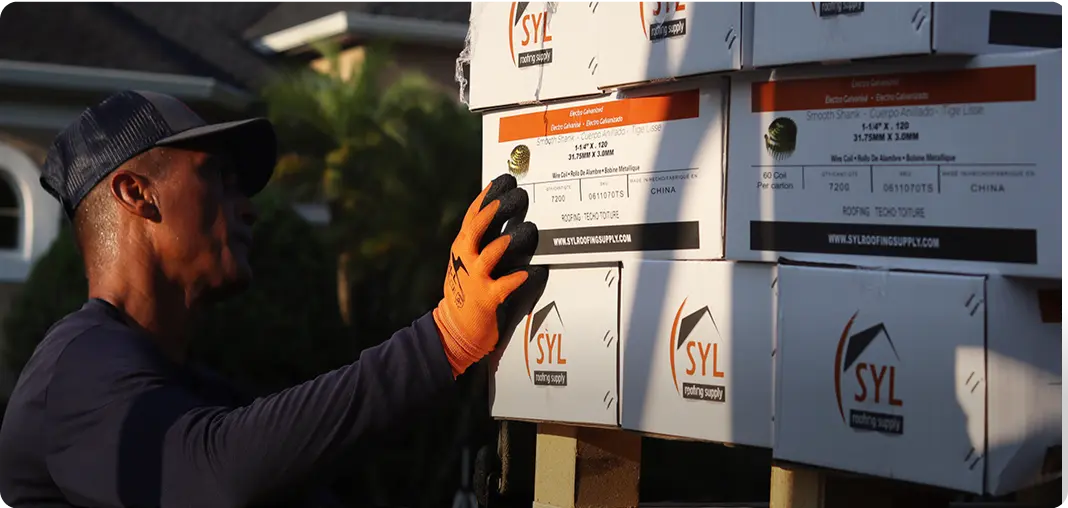
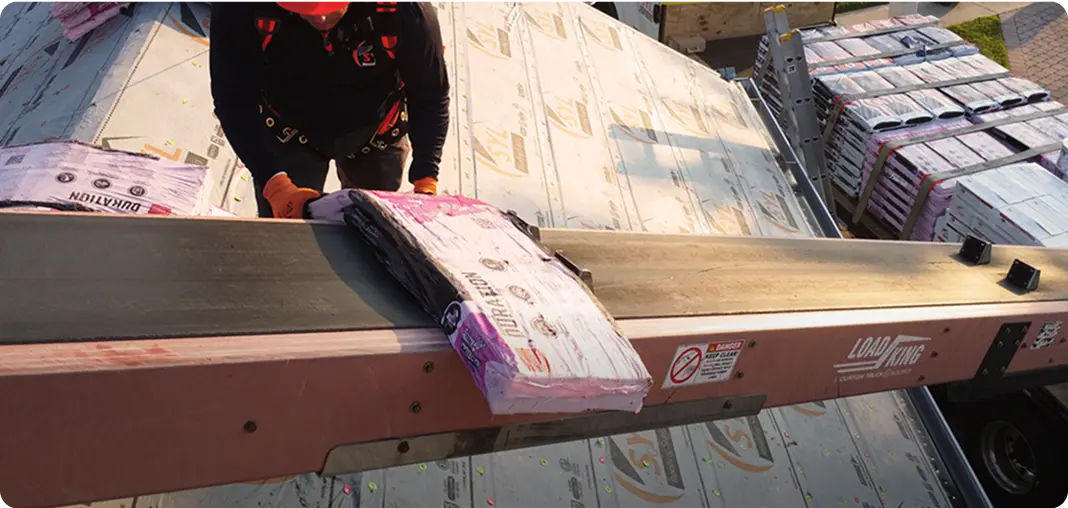
Confirm how the membrane rolls, adhesives, insulation, cover board, metal, and small accessories will arrive and where each group can be received. Review weight, access, unloading, rooftop placement requests, weather exposure, temperature-sensitive products, and manufacturer storage instructions before scheduling the delivery.
Assign one person to compare the delivered product codes and quantities with the final order. Keep roll labels visible until the foreman confirms which materials belong to each roof layer and detail. Separate anything that is damaged, wet, opened, or different from the approved list until it can be reviewed.
Our team can help coordinate the known order and delivery details. Send the final material list, job address, receiving contact, access notes, requested placement, needed-on-site date, and any special handling questions early enough for the available options to be reviewed.
Release One Final Version to Purchasing, Delivery, and the Foreman
The final handoff should contain the exact roof system reference, takeoff revision, membrane groups, attachment materials, insulation and cover-board schedule, roof-detail list, accessories, quantity assumptions, delivery instructions, receiving contact, and unresolved questions.
Date the release and identify the person who can approve a change. This keeps a substitute, revised detail, or quantity adjustment from living in a text thread that the foreman never sees.
Frequently Asked Questions
What materials are usually included in a low-slope membrane roof order?
Review the specified bottom, middle, top, and flashing membranes along with the documented adhesives or fasteners, primers, insulation, cover board, perimeter materials, drains, penetrations, accessories, safety-related product information, and delivery needs. The exact list depends on the selected roof system.
Can different low-slope roofing membranes be used interchangeably?
No general substitution should be assumed. Products can have different installation methods, purposes, approvals, and compatibility requirements even when the rolls appear similar. Use the current project documents and manufacturer information for the selected roof system.
Does every low-slope membrane roof need both a base sheet and a top sheet?
No. Roof systems do not all use the same number or type of layers. Confirm the specified system, roof surface, installation method, and manufacturer requirements before deciding which membrane layers belong in the order.
When should the delivery plan be confirmed?
Confirm it before the order is released. The supplier and receiving team need time to review product groups, weight, access, placement, storage conditions, weather exposure, equipment, and current delivery availability.