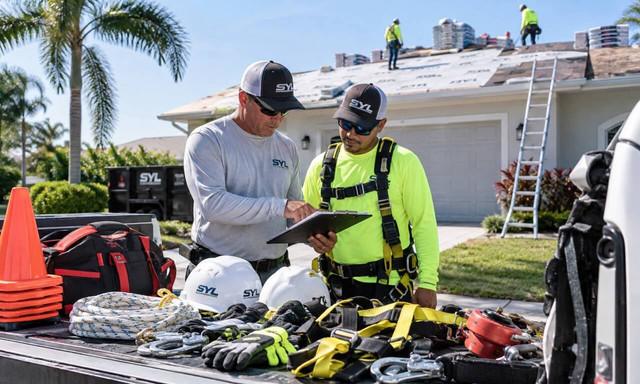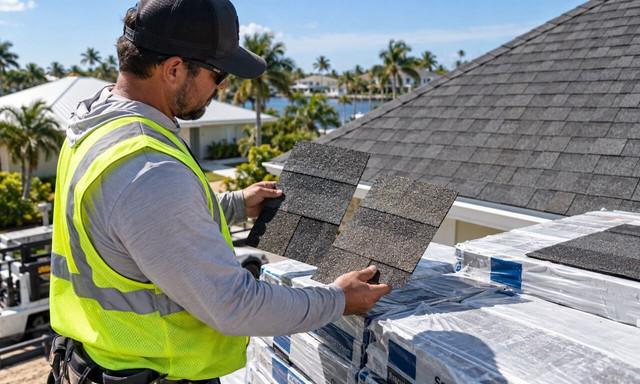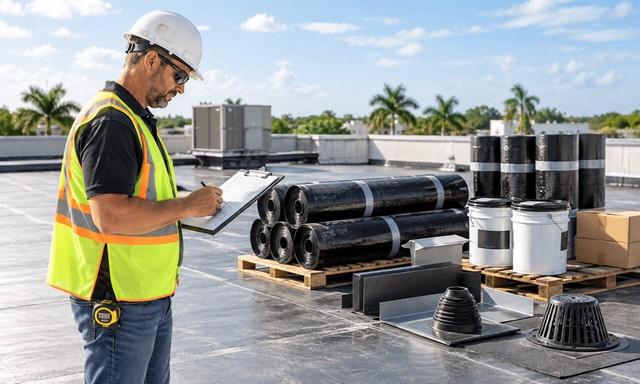

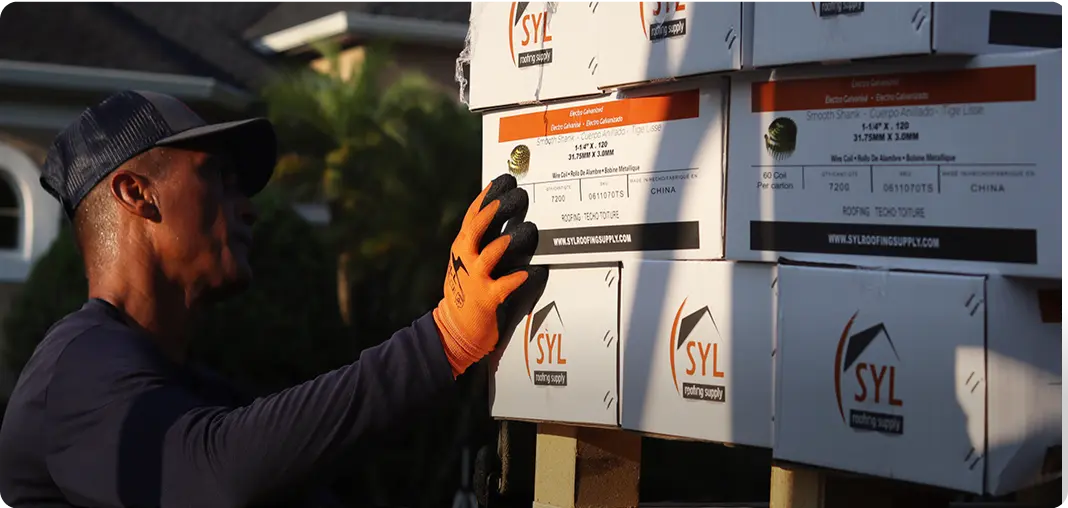
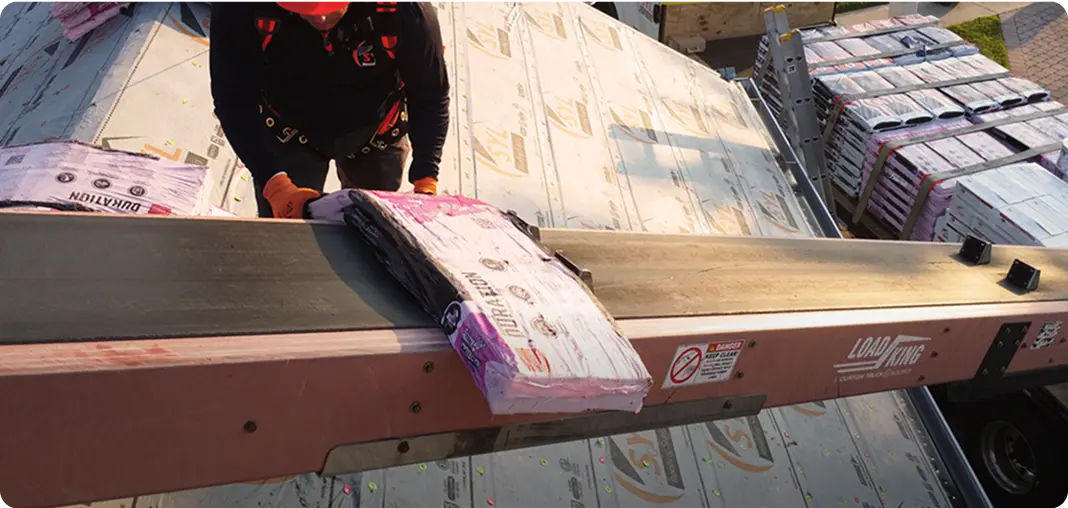

A roofing material delivery inspection is the point where the purchase order, truck load, jobsite plan, and crew schedule meet. If no one owns that handoff, a shortage, wrong product, damaged package, or misplaced pallet may not surface until installation is already waiting.
The receiving check does not need to delay a well-planned drop. It needs a current order, one responsible contact, a safe inspection path, and a clear way to record exceptions while the delivery information is still fresh.
Use this workflow for ground-level or rooftop requests, then adjust it for the actual material, site, equipment, weather, and delivery instructions.
TL;DR
- Have the latest order and an authorized receiving contact ready before arrival.
- Check product identity, quantity, package condition, and placement by material group.
- Do not enter an active unloading zone or interfere with equipment movement.
- Photograph labels and exceptions before packaging is opened or material is redistributed.
- Record shortages, damage, substitutions, and placement changes in one handoff note.
- Tell the foreman what was accepted, held, or still needs resolution.
Prepare the Receiving Check Before the Truck Arrives
The inspection begins with the delivery request. Send the job address, receiving contact, access notes, requested placement, material groups, known restrictions, and current schedule when the order is released.
Our roofing material delivery services include several equipment and placement options, but the available method depends on the order, route, site, weather, scheduling, equipment, and current conditions. Treat the requested drop as a plan to coordinate, not a promise that overrides a changing jobsite.
Use the preparation points in Scheduling Roofing Material Deliveries so dispatch and the receiving lead start with the same access and timing information.
Give the receiving contact the final purchase order, supplier acknowledgment, expected delivery ticket, jobsite map when useful, and authority limits. If that person cannot approve a substitution or placement change, identify who can.
Set a Safe Inspection Boundary
The receiver should coordinate with the driver or delivery crew before approaching the load. Stay outside equipment swing areas, travel paths, fall zones, suspended-load areas, and other controlled spaces. The delivery team and employer safety plan should control where observation and counting can happen.
Do not climb on the truck, pallets, roof, or material to obtain a label photo unless the responsible team has provided a safe, authorized method. A complete inspection is important, but it does not justify entering an active unloading hazard.
If weather, blocked access, overhead obstructions, soft ground, traffic, occupants, or another site change affects the plan, stop and communicate. The team may need to revise placement, sequence, or timing before unloading continues.
Check the Delivery in Material Groups
Do not count only the largest bundles. Compare the load with the final order by system and material group so the small components remain visible.
| Check | What to compare | What to record |
|---|---|---|
| Product identity | Manufacturer, product line, color, size, thickness, profile, product code, and relevant lot or label data | Readable label photos and any mismatch |
| Quantity | Bundles, rolls, boards, pieces, cartons, pails, and separately packaged accessories | Accepted count, shortage, overage, or item not accessible to count |
| Condition | Torn wrapping, crushing, bending, wet packaging, open containers, broken pieces, or visible handling damage | Wide and close photos before the group moves |
| Placement | Assigned drop zone, roof area, pallet grouping, protected storage, and crew access | Actual location and any approved change |
| Paperwork | Purchase order, delivery ticket, backorders, substitutions, notes, and signatures | Final ticket image and open exception owner |
Some packaging can be inspected only after a group is placed. Note what was visible at delivery and what the foreman still needs to verify when the material can be checked safely.
Verify Product Identity Before Opening or Mixing
Check labels while the shipment is organized. Similar packaging can hide a different color, profile, thickness, length, fastening accessory, membrane type, or product generation.
Photograph one readable label from each distinct pallet, roll group, carton, or packaged product. For shingles, tile, coatings, membranes, insulation, and metal components, capture any manufacturer codes that matter to matching or compatibility.
Do not mix a questionable product into accepted material. Mark it, keep it identifiable, and contact the supplier with the order number, item, label photo, quantity, and job impact. An early, specific exception is easier to review than a message sent after wrappers are gone.
Document Damage Without Deciding From Appearance Alone
A torn wrapper is not automatically the same as damaged product, and intact packaging does not prove every piece inside is usable. Record what can be observed without overstating the conclusion.
Take a wide photo that shows the material group and a close photo of the condition. Note whether the issue was seen before unloading, during placement, or after the group was set down. Keep the material separate when the condition could affect use, safety, weather exposure, or identification.
The responsible contractor, supplier, manufacturer, or other project party may need to decide whether the product can be accepted. Do not hide damage by moving the affected pieces into the middle of a stack.
Confirm Placement and Protect the Installation Sequence
The right count in the wrong location can still cost crew time. Compare the actual placement with the jobsite plan by roof area, elevation, phase, unit, or material system.
Keep heavy or fragile material within the approved staging plan. Protect access routes, drains, finished surfaces, openings, and emergency paths. If a planned rooftop placement changes to a ground drop, document the new location and tell the foreman what labor or equipment may now be needed.
Do not direct a driver or equipment operator to a new placement area without the required site and delivery coordination. A last-minute shortcut can create access, loading, property, or safety problems that the original plan avoided.
Close the Handoff With One Exception Record
Before the delivery closes, record the date and time, purchase order, delivery ticket, receiving contact, accepted material groups, shortages, overages, visible damage, substitutions, placement changes, photos, and the person responsible for each open item.
Connect that note to the broader process in How to Track Roofing Material Orders, Deliveries, and Invoices From the Jobsite. The office and foreman should be able to see the same status without rebuilding it from calls and texts.
If the ticket requires a signature, follow the contractor's authorization policy and note exceptions through the available process. A signature should not erase a documented shortage or condition concern.
Tell the Crew What Is Ready and What Is on Hold
The final handoff should state which material groups are accepted, where they are located, which groups are held for review, and what is still coming. Use product names and locations the foreman can recognize.
Our team can help investigate a documented order or delivery question. Send the purchase order, delivery ticket, item details, label photos, condition photos, and receiving notes as soon as an exception appears.
Frequently Asked Questions
Who should inspect a roofing material delivery?
Assign an authorized person who has the current order, knows the planned drop, can coordinate safely with the delivery crew, and understands when an exception needs approval from someone else.
Should every package be opened before the truck leaves?
Not necessarily. Check visible labels, counts, packaging, and conditions through the safe receiving process. Record what could not be inspected and assign the follow-up to the foreman or another responsible person.
What should be photographed during delivery?
Photograph distinct product labels, material groups, quantities when helpful, placement, visible damage, torn or wet packaging, substitutions, and the delivery ticket. Include wide and close views for exceptions.
What happens if the delivered product does not match the order?
Keep it identifiable and separate, document the product and label, contact the supplier, and wait for an authorized resolution before the crew opens, mixes, or installs it.