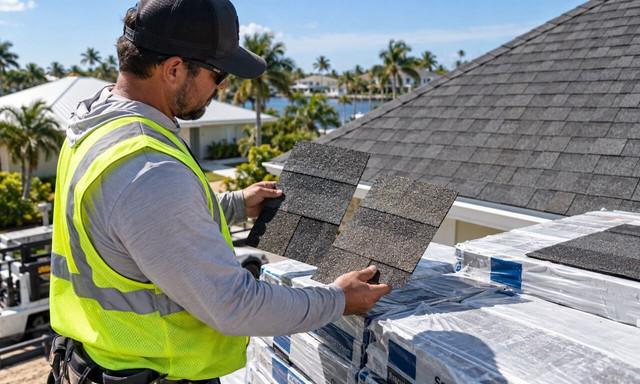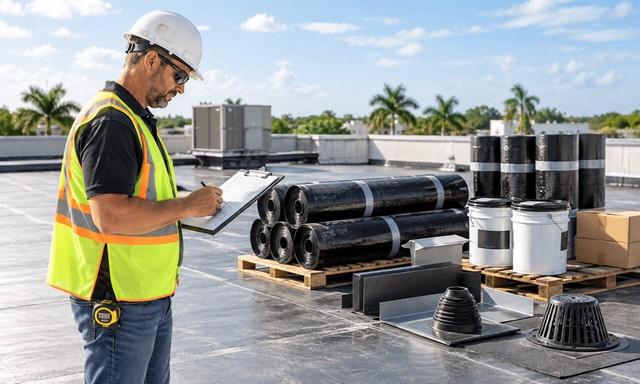

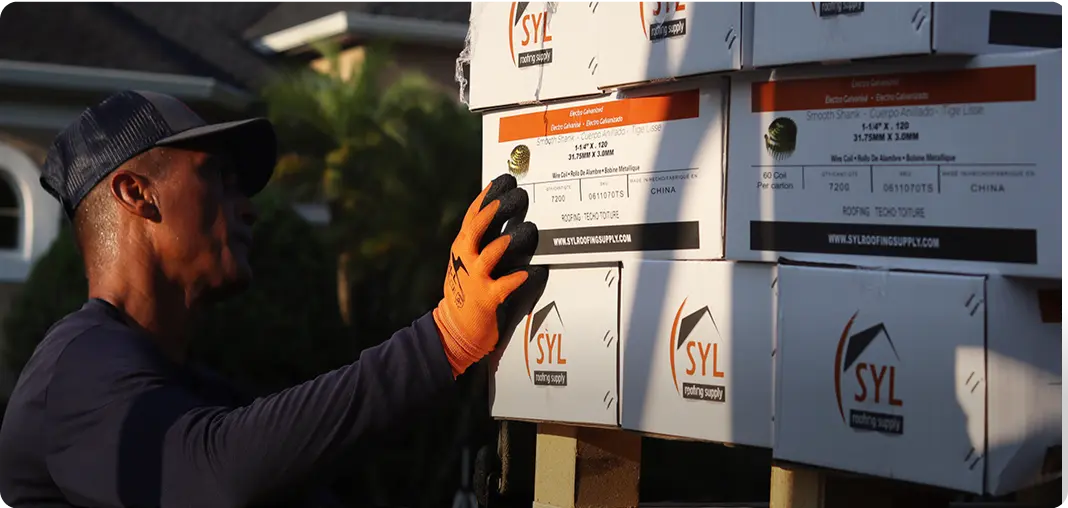
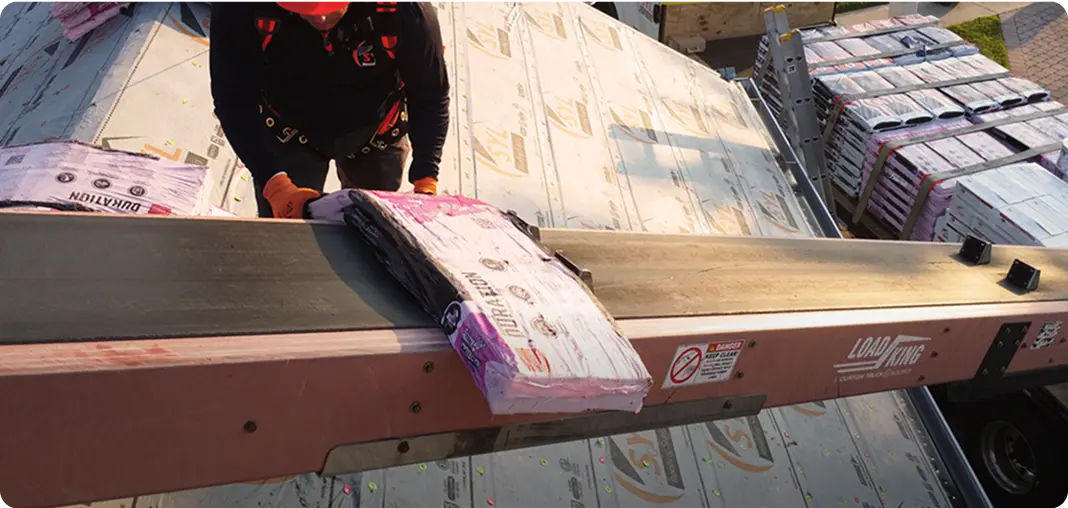
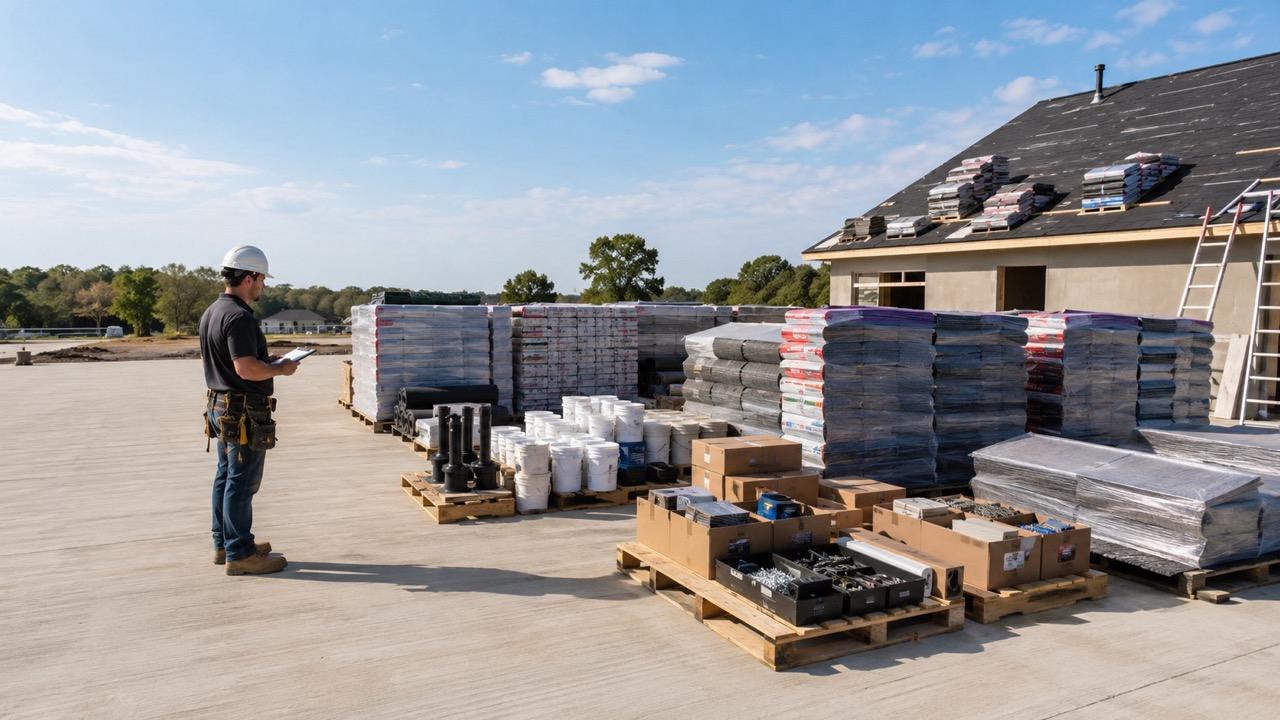
Roofing material staging is where a job can start clean or start chaotic. When pallets, rolls, fasteners, tools, and accessories are dropped without a plan, the crew loses time before the install even begins.
For Florida roofing crews, that matters. Heat, storms, access limits, tight crew schedules, and inspection timelines all make jobsite organization more important. A few minutes of staging discipline can prevent hours of re-handling later.
Staging is where time is won or lost before the first install step begins.
If your crew needs help lining up materials with the actual jobsite schedule, SYL Roofing Supply offers jobsite delivery planning built around contractor workflow.
Why Staging Is Where Time Is Won or Lost
A roofing crew should not spend the morning searching for the right pallet, opening boxes to find fasteners, or moving materials that were dropped in the wrong spot.
Good staging helps crews move from delivery to install with less confusion. Poor staging does the opposite. It creates extra handling, slows communication, blocks access paths, and increases the chance that small parts get lost.
That does not mean every job needs a complex staging system. It means every job needs a simple plan before materials arrive.
When you are planning the job, start by reviewing the main roofing materials and grouping them by install sequence, not just by product category.
Stage by Install Sequence, Not by What Is Easiest to Unload
It is tempting to unload materials wherever there is space. That may be fastest for the moment, but it is rarely best for the crew.
A better approach is to stage by the order the crew will use materials.
For many jobs, that means keeping early-phase items easiest to access:
- underlayment
- starter materials
- fasteners
- sealants
- tools and accessories
- ventilation or flashing parts tied to the first install phase
The goal is simple: the first materials needed should not be buried behind the last materials needed.
A clean install starts with the materials placed in the order the crew will actually use them.
For contractors who want supply and delivery support tied to how the crew works, SYL is a roofing supply partner built for Florida jobsite realities.
The Staging Checklist
Use this checklist before or during the material drop.
Define the drop zone.
Choose a safe, accessible area that gives the truck room to unload and gives the crew a clear path to the roof.
Separate by system category.
Group shingles, underlayment, flashing, fasteners, sealants, and tools so the crew can identify them quickly.
Create a small parts bin.
Keep fasteners, clips, blades, sealants, and other accessories in one labeled location.
Build a “today box.”
Set aside what the crew needs for the first phase of install.
Protect materials from weather.
Use covers, shade, or relocation when Florida rain or sun could create problems.
Assign a receiver.
Make one person responsible for checking the drop and knowing where paperwork lives.
This checklist is short on purpose. The goal is to make it repeatable, not complicated.
How to Prevent the Missing Small Parts Problem
Small parts create big delays because they are easy to overlook and easy to misplace. Fasteners, sealants, blades, clips, and tapes do not take up much space, but a missing box can stop the crew.
The best fix is a dedicated small parts system.
Use one labeled bin or tote for:
- fasteners
- sealants
- tapes
- blades
- drill bits
- clips
- small accessories
Check the bin at the start of the day and again during teardown. This keeps missing parts from becoming a surprise when the crew is already on the roof.
If you are building the order from scratch, use SYL’s browse roofing product categories page to identify the small parts that should travel with the main materials.
Delivery vs Pickup Impacts Staging
Delivery and pickup both have a place. The better choice depends on the job, crew schedule, and access conditions.
| Planning Factor | Pickup by Crew | Direct Jobsite Delivery |
|---|---|---|
| Crew time | Crew leaves the job or yard | Crew can stay focused on install |
| Staging control | Often rushed | Easier to plan around drop zone |
| Error risk | Higher if items are grabbed quickly | Lower when order is checked before drop |
| Weather exposure | More handling and transport risk | Better timing when scheduled correctly |
A delivery plan can reduce re-handling when the drop zone and staging notes are clear. A pickup can still make sense for a quick add-on, but it should not become the default fix for poor planning.
For jobs where timing matters, SYL’s delivery options for roofers can help align material drops with crew readiness.
Next Step: Plan the Drop Zone Before the Truck Arrives
Efficient staging starts before the truck is on site. Confirm the drop zone, unload path, receiver, small parts bin, and first-phase materials before delivery day.
The payoff is simple: fewer searches, fewer second runs, cleaner crew movement, and less time lost before install begins.
FAQ
What is roofing material staging?
Roofing material staging is the process of placing materials, tools, and small parts on the jobsite in a way that matches the install sequence. Good staging helps crews find what they need quickly and reduces re-handling.
Why should materials be staged by install sequence?
Staging by install sequence keeps the first-needed materials easiest to access. This prevents crews from moving pallets or opening multiple boxes just to find what they need for the next phase.
What small parts should be kept together?
Fasteners, sealants, blades, drill bits, clips, tapes, and small accessories should be kept in one labeled bin or tote. These items are easy to lose and can stop work if they are missing.
Is delivery better than pickup for staging?
Delivery is often better for planned jobs because materials can be dropped with staging instructions. Pickup may work for urgent add-ons, but it can create more crew downtime if it becomes the default process.
References
- McKinsey & Company. Improving construction productivity. https://www.mckinsey.com/business-functions/operations/our-insights/improving-construction-productivity
- OSHA. Materials handling and storage. https://www.osha.gov/enforcement/directives/std-03-00-001
- Rethink Plans. The staggering cost of poor productivity in construction. https://www.rethinkplans.com/insights/the-staggering-cost-of-poor-productivity-in-construction
- Supply Chain Management Review. Construction material procurement and productivity. https://www.scmr.com/article/construction-material-procurement-productivity