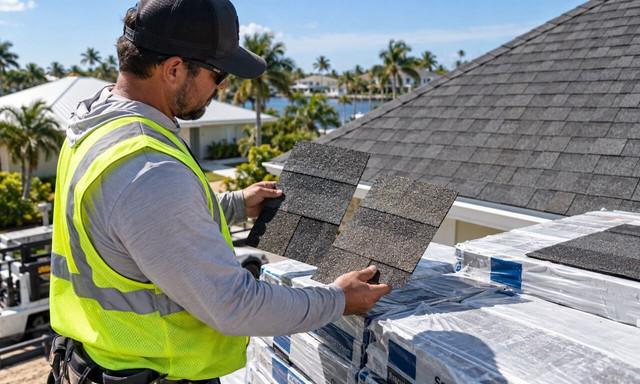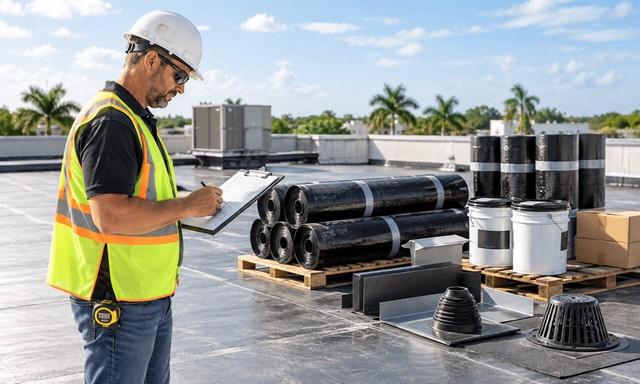

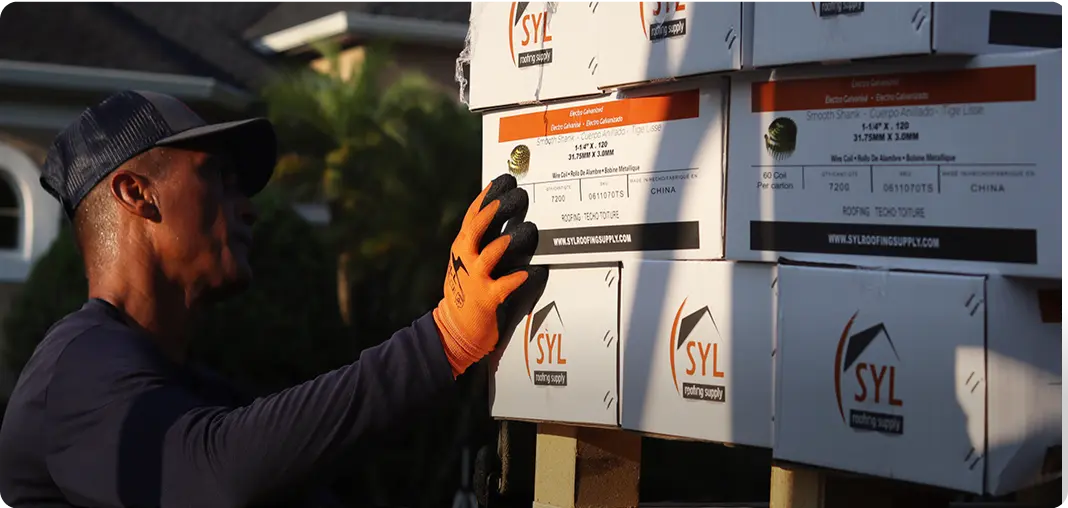
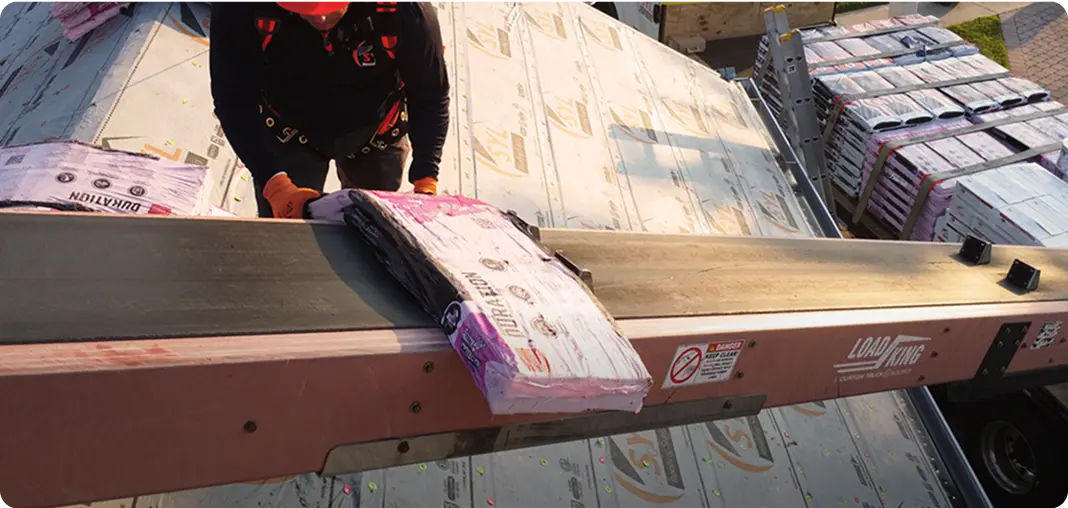
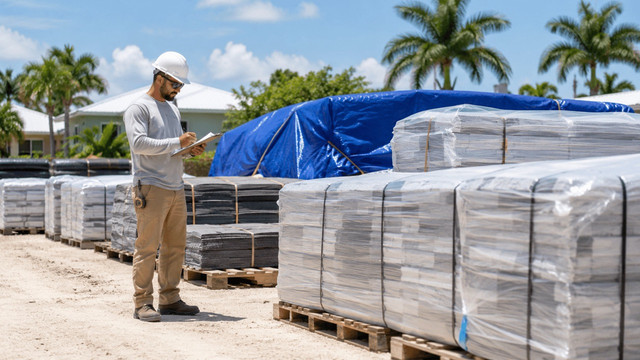
Roofing material storage starts before the truck reaches the jobsite. If the crew has not chosen a receiving area, inspection point, and protected storage plan, the materials may be moved several times or placed where labels, damage, and small parts are hard to see.
Florida jobsites add practical pressure. Rain, heat, changing schedules, limited space, and active site traffic can alter the plan quickly. The right response is not one universal storage rule. It is a repeatable workflow built around the specific materials, their directions, and the site.
This guide helps contractors plan receiving, protection, inspection, and crew handoff without replacing manufacturer instructions, project documents, or jobsite requirements.
TL;DR
- Choose the receiving and storage zones before the delivery arrives.
- Let packaging, labels, manufacturer directions, and project documents set the handling baseline.
- Keep inspected, questionable, and next-to-use materials visibly separated.
- Check materials at arrival and again before they are distributed or installed.
- Give the foreman a short handoff showing locations, status, and ownership.
Why Jobsite Storage Planning Starts Before Delivery
Picture a delivery arriving while the planned drop area is blocked and the only open space sits in the crew's active path. The order may be correct, but the team now has to choose between an improvised location and repeated handling. Both make inspection, identification, and access harder.
A better plan begins by matching the storage area to the roofing materials included in the order. Consider the broad categories, package sizes, expected install sequence, site access, and any product-specific protection questions before the delivery is scheduled or accepted.
A storage location is part of the material plan, not leftover space after unloading.
Choose an area that the site permits, the receiving person can inspect, and the crew can use without losing track of labels or condition. If the jobsite changes, update the location and communicate the change before the truck arrives.
Use Product Directions as the Storage Baseline
Roofing products do not all share the same rules for position, support, exposure, packaging, stacking, or time on site. Review the label, original packaging, current manufacturer information, supplier guidance, project documents, and site requirements for every relevant category of roofing supplies and accessories.
Ask practical questions before materials leave the supplier or move around the site. Should the package remain intact? Does the product have a required position or support method? Are there stated exposure limits or inspection steps? Who should be contacted when the direction is unclear?
Manufacturer documents show why a generic rule is risky. For example, GAF's current shingle storage bulletin provides product-specific pallet-stacking guidance and calls for visual inspection before installation. That kind of detail belongs to the named product, not every roofing material on the site.
Use general planning to organize the jobsite, then let the applicable product information control the handling decision. When directions conflict or appear incomplete, stop and clarify rather than choosing the most familiar method.
Set Up a Storage Zone That Supports the Crew
The storage area should support receiving, inspection, protection, and installation sequence. It should also respect the site's access plan, active traffic, assigned work areas, and any restrictions set by the responsible site team.
A simple zone map can keep the layout clear:
- Receiving area: The first inspection point before materials are distributed
- Ready area: Clearly identified material that has completed the receiving check
- Hold area: Questionable, damaged, wet, altered, or mismatched items awaiting review
- Small-parts area: Labeled accessories, tools, and containers grouped by task or roof area
- Next-use area: Materials the crew expects to need first, placed according to the approved handling plan
Storage and staging are related but not identical. Storage protects identity and condition while materials wait. Staging arranges ready material around the work sequence. The workflow in Roofing Material Staging: How to Organize Pallets and Small Parts for a Faster Install can help the crew move from a controlled storage layout into an install-ready sequence.
Mark or communicate the zones before unloading. A short site sketch, photo, or written note can be enough if everyone knows which version is current.
Protect Different Material Categories Without Hiding Problems
Protection should keep materials identifiable and inspectable. Covering everything the same way, combining unrelated small parts, or placing new deliveries on top of unchecked material can hide the very problems the crew needs to catch.
Bundled and Stacked Materials
Confirm the condition of the wrapping, labels, supports, pallets, and surface before accepting the location. Check the manufacturer's limits and handling directions before stacking or placing additional weight on packaged materials.
Keep product identity visible. If a bundle or pallet is moved, the new location and status should still be clear to the receiving person and foreman. Do not rely on memory once several similar-looking products are on site.
Rolled and Packaged Materials
Review the required position, support, packaging condition, and exposure guidance for the specific product. Do not assume that every roll should be stored the same way or that unopened packaging removes the need for a condition check.
Separate questionable packages from ready material. The crew should be able to see what is approved for the next step and what still needs product or supplier guidance.
Small Parts, Tools, and Containerized Products
Group small items by task, roof area, or install sequence, and keep the labels visible. Use an assigned location that will not disappear behind larger materials or become a catch-all for unrelated items.
For adhesives, coatings, sealants, and other containerized products, follow the product label and current handling information. If a container is open, damaged, leaking, or inconsistent with the directions, isolate it and follow the site's response process.
Inspect and Document Materials at Arrival and Before Use
One inspection at delivery is useful, but conditions can change after unloading. A second check before distribution or installation helps the team distinguish the material's arrival condition from anything that happened during storage or later handling.
At arrival, compare the order or delivery record with the visible categories and counts, review labels and packaging, and photograph notable conditions when useful. Record anything questionable and move it to the hold area instead of mixing it with ready material.
Before use, confirm that the identification is still visible, packaging and condition remain consistent with product directions, and the correct material is moving to the correct task. If weather or site conditions changed, use the planning ideas in Roofing Supply for Storm Season: What to Stage So Jobs Stay on Schedule to revisit exposure, timing, and crew communication.
When something needs review, contact the supplier promptly with the order reference, product identity, photos, and a clear description. Do not install or distribute questionable material while the answer is still unresolved.
Create a Storage Handoff the Crew Will Follow
The person receiving the delivery may not be the person leading installation. A short handoff prevents the next shift or foreman from having to reconstruct the storage plan from scattered messages.
Use a repeatable handoff:
- Identify where each broad material category is stored.
- Mark what has been inspected and what remains on hold.
- Record shortages, visible damage, label questions, or changed site conditions.
- State which material is expected to move first and who controls that decision.
- Name the person responsible for the next condition check.
- Attach the latest storage note, photos, and supplier communication to the job record.
Keep the handoff short enough to update when the site changes. If unusual access, timing, or protection needs affect the delivery, SYL can help the contractor communicate the material and logistics details before the order reaches the site.
Frequently Asked Questions
Can roofing materials be stored outside before installation?
It depends on the specific product, packaging, manufacturer directions, expected exposure, site rules, and project plan. Confirm those requirements before choosing an outdoor location rather than applying one answer to every material category.
Should roofing materials be covered on a Florida jobsite?
Use the applicable product directions and project requirements. Any protection method should preserve identification and inspection access and remain consistent with the applicable product and site directions.
How should small roofing parts be organized before the crew arrives?
Group them by task, roof area, or install sequence, keep the labels visible, record the received quantities, and assign a protected location that the foreman can find and review quickly.
What should contractors do if materials arrive wet or damaged?
Stop, separate the questionable material from ready stock, document the visible condition, review the applicable product guidance, and contact the supplier with the order details before use. The appropriate response depends on the material and the findings of that review.