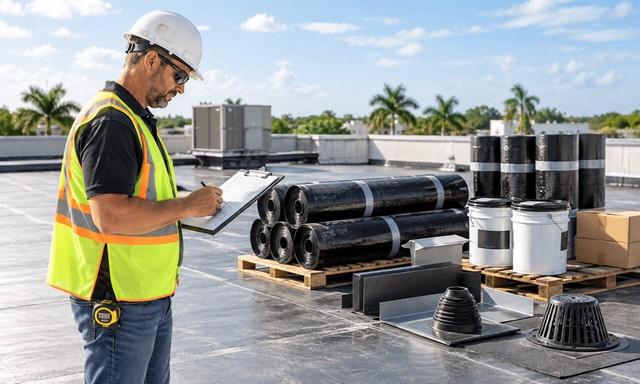

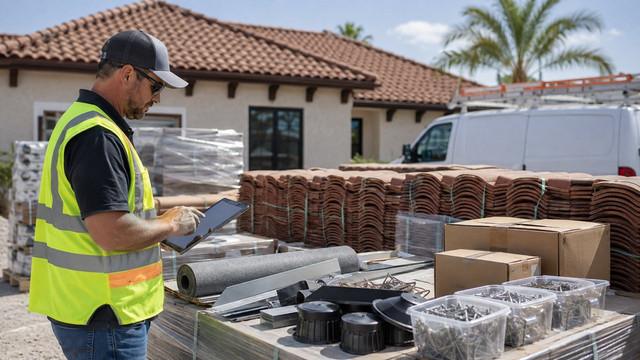
Tile roof material planning for a Florida job starts with the complete roof system, not the field tile count. The tile may be the most visible part of the order, but the crew also needs coordinated underlayment, flashing, trim pieces, attachment components, weather-blocking materials, and jobsite logistics.
That coordination matters because tile profiles, roof geometry, project documents, and approved installation methods can change what belongs on the order. A substitution that looks minor on a material list can affect several connected components.
The practical goal is to turn the project information into one order that your estimator, supplier, foreman, and receiving crew can all recognize.
TL;DR
- Start with the specified tile system, roof conditions, and current project documents.
- Order field tile and trim tile as separate material groups.
- Coordinate underlayment, flashing, attachment, closures, and accessories as one system.
- Base quantities and contingency material on the takeoff, roof geometry, tile profile, and approved project method.
- Plan loading, staging, and receiving before the material is released.
Begin With the Roof System That Was Actually Specified
A request for “concrete tile” or “clay tile” is not enough to release a complete order. Record the manufacturer, profile, color, project address, roof plan, known slope information, and any product or system references supplied by the responsible project team.
Use those details to review the relevant roofing material categories and identify what still needs confirmation. The product page can help organize the supply conversation, but it does not replace the project documents, current product information, or an approval review for the specific job.
The current FRSA-TRI Florida High Wind Concrete and Clay Tile Installation Manual treats tile roofing as a coordinated assembly and directs users to applicable codes, product approvals, and manufacturer instructions for project-specific decisions. That is the right planning frame: identify the system first, then build the order around it.
A tile name begins the order. The documented roof system completes it.
Build the Order in Material Groups, Not One Long List
A grouped order makes missing categories easier to spot. It also gives the foreman a cleaner way to compare the delivered material with the plan before installation begins. Before you lock the material groups, use our underlayment and waterproofing ordering guide to surface system questions that need project-specific confirmation.
| Material group | What to confirm | Why it belongs in the order review |
|---|---|---|
| Field tile | Manufacturer, profile, color, takeoff quantity, and packaging information | This is the main roof covering, but it does not include every roof condition. |
| Trim tile | Hip, ridge, rake, starter, or other profile-specific pieces shown in the plan | Trim pieces may have different counts, profiles, and attachment details. |
| Underlayment | System type, number of plies when applicable, compatible accessories, and current documentation | The water-shedding plan below the tile must match the selected roof system. |
| Flashing and edge materials | Eaves, rakes, valleys, walls, penetrations, transitions, and other details shown for the roof | Roof geometry determines which flashing categories are needed. |
| Attachment and support | The documented mechanical, adhesive, mortar, batten, or support approach and its approved components | Attachment products cannot be selected from habit alone. |
| Closures and weather blocking | Profile-specific eave, hip, ridge, and transition components | These materials complete details that field tile cannot complete by itself. |
| Accessories and protection | Compatible sealants, primers, fasteners, repair materials, covers, and handling supplies | Small items often control whether the planned system can be installed as documented. |
Do not treat the table as a universal shopping list. Use it as a category check against the approved takeoff and the actual roof details.
Coordinate Underlayment, Flashing, and Attachment
The most important question is not whether each individual product is familiar. It is whether the selected underlayment, flashing approach, attachment method, and tile system belong together for the job.
Follow the documented underlayment path
Florida tile projects can involve different underlayment assemblies and application methods. Review the project specification, current product approval information, and manufacturer instructions before finalizing the material request. Use a general ordering guide to organize the category questions without turning it into a project specification.
Map flashing to the roof geometry
Mark valleys, eaves, rakes, walls, penetrations, transitions, and any special details on the roof plan. Then compare those conditions with the assigned flashing details. The checklist in Roof Flashing Order Planning is useful for checking categories before the order moves forward.
Attachment needs the same discipline. Do not replace the specified approach with a familiar fastener, foam, mortar, or adhesive based only on what was used on another job. Confirm the current system documentation and send unresolved questions back to the appropriate project professional or authority.
Account for Profiles, Cuts, Trim, and Contingency
A field-tile area does not describe every piece the crew will handle. Hips, ridges, rakes, valleys, penetrations, roof transitions, and cut-heavy areas can change the mix of field and trim material.
Use the approved takeoff and roof plan to separate those quantities. Confirm how the estimator treated cuts, broken pieces, color blending, future repair stock, and packaging increments. There is no responsible universal extra percentage for every tile roof, so do not add a guessed allowance simply because it is common on another profile.
If a specific trim piece or color is difficult to replace later, label that risk before the order is released. The decision about contingency material should be visible, documented, and tied to the actual job.
Plan Loading, Staging, and Receiving Before Release
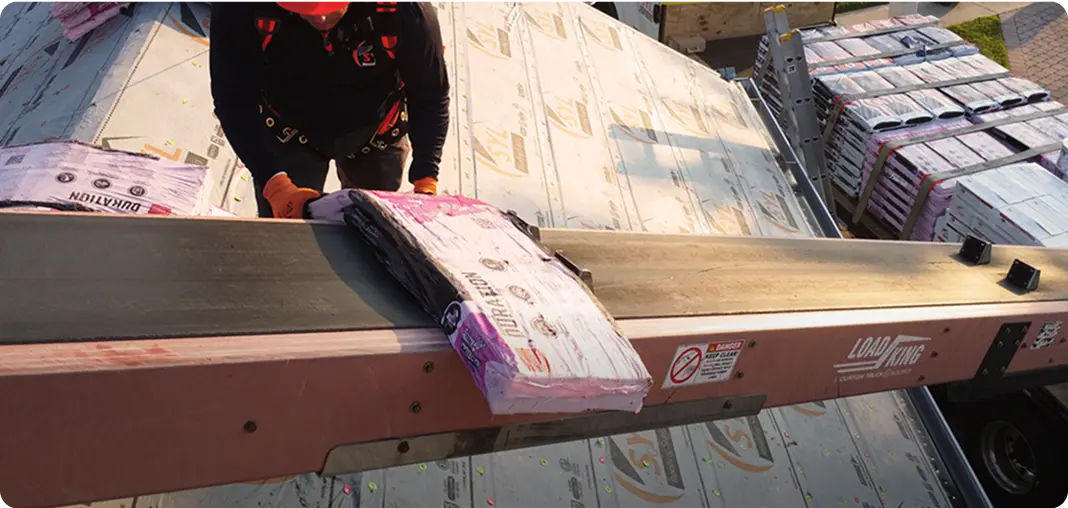
Tile is heavy, breakable, and sensitive to how it is distributed. The FRSA-TRI manual calls for tile stacks to be distributed uniformly rather than concentrated and for the underlayment to be protected during loading and stacking. The project team still needs to determine the permitted loading plan for the specific structure and site.
Before scheduling roofing material delivery, give our logistics team the job address, contact, access notes, planned drop location, material groups, roof or ground placement request, and any known site restrictions. Delivery method and equipment remain subject to the order, route, site, weather, and current availability.
The receiving crew should have the final order version and a way to identify field tile, trim, underlayment, flashing, and accessory groups. Report a mismatch before packaging is scattered across the jobsite.
Use One Final Order Handoff
Bring the roof plan, takeoff, tile identity, system documentation, category checklist, open questions, delivery instructions, and receiving contact into one handoff. Date the final version so the office, supplier, and foreman are not working from different revisions.
Our team can help you organize the known material and delivery details. Project-specific design, approval, installation, and quantity decisions should stay with the responsible contractor, estimator, manufacturer guidance, project professional, or authority.
Frequently Asked Questions
What materials are commonly reviewed with a tile roof order?
Review field tile, profile-specific trim, underlayment, flashing and edge materials, attachment components, closures, compatible consumables, protection supplies, and delivery requirements. The final list must come from the actual project documents and takeoff.
How much extra roof tile should a contractor order?
There is no single allowance that fits every roof. Base contingency material on roof geometry, cuts, the tile profile, packaging, expected handling, the approved takeoff, and whether matching repair stock may be needed.
Can the crew substitute a familiar underlayment or attachment product?
Do not make that decision from habit. Compare any proposed change with the current project documents, product approvals, manufacturer instructions, and direction from the responsible project party before changing the order.
When should delivery placement be decided for a tile order?
Discuss placement before release, while the logistics team can review material groups, access, roof readiness, site conditions, equipment needs, and receiving responsibilities. Final availability depends on the specific order and jobsite.